
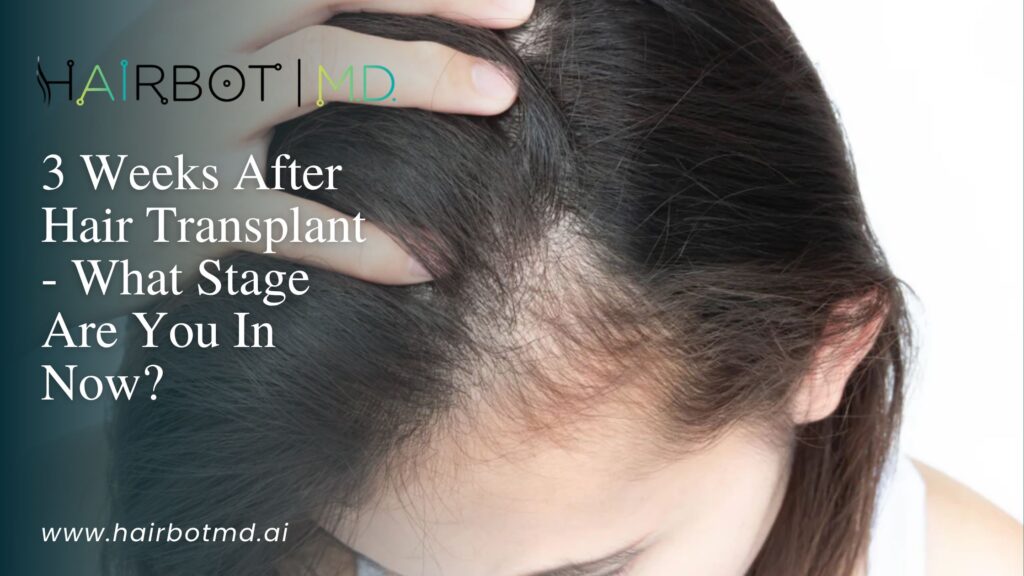
At 3 weeks after hair transplant, things can feel backward. The scalp looks healed, redness has faded, scabs are gone, but suddenly, hair starts shedding more. For many patients, this is the exact moment doubt kicks in. It feels like progress is reversing. But what’s actually happening at 3 weeks after hair transplant is not failure, it’s a biological reset.
This stage creates confusion because surface healing and follicular activity don’t move together. By 3 weeks after hair transplant, epithelialization is complete, and grafts are firmly anchored within the dermis.
Structurally, the procedure is stable. But beneath the skin, follicles are shifting into the telogen (resting) phase, triggered by surgical stress. This leads to shedding, also known as shock loss.
Understanding 3 weeks after hair transplant means separating what you see from what’s happening underneath. The skin has healed, yes but the follicles are temporarily shutting down before restarting growth. At HairBot MD, this is called the telogen reset phase, where shedding signals transition, not damage.
This guide helps you understand your exact stage at 3 weeks after hair transplant, what changes are normal, and how to judge recovery the right way, not just by the mirror.
3 Weeks After Hair Transplant – The Telogen Reset Phase Explained
At 3 weeks after hair transplant, the biology shifts in a way most patients don’t expect. You might look for growth, but that’s not what this stage is about. The dominant process at 3 weeks after hair transplant is follicular dormancy initiation, not visible regrowth. It feels like nothing is happening, but actually, a lot is changing under the surface.
Follicular Cycling Shift
At 3 weeks after hair transplant, follicles begin resetting their cycle. This is normal, even if it looks concerning.
- Hair follicles exit the anagen (growth phase) due to surgical stress
- Follicles shift into telogen (resting phase) earlier than usual
- Hair shafts detach and shed, while follicles remain intact underneath
- Shedding appears sudden, creating the illusion of density loss
So yes, it looks like you’re losing hair. But you’re not losing the grafts.
At 3 weeks after hair transplant, this is programmed physiology, not a complication. The follicles are still alive, just temporarily inactive. Growth pauses here so it can restart stronger later.
This stage is quiet, but important. What’s happening now sets the base for future regrowth.
3 Weeks After Hair Transplant – What the Scalp Condition Tells You
At 3 weeks after hair transplant, don’t judge progress by hair in the mirror. It can mislead you. Instead, look at the scalp. That’s where the real signals are. At 3 weeks after hair transplant, clinical evaluation focuses on scalp stability, not density. Hair may shed, look uneven, but if the scalp is stable, recovery is moving in the right direction.
Clinical Signs of On-Track Recovery
At 3 weeks after hair transplant, a few clear signs tell you everything is going as expected
- Recipient area looks fully closed, no open wounds
- Redness (erythema) is minimal or gradually fading
- No active crusting or scabbing remains
- No pain, no discharge, no signs of infection
Simple indicators, but they matter a lot.
If these are present, then at 3 weeks after hair transplant, your grafts are already secure and anchored within the dermis. That means the critical healing phase has passed.
Even if hair looks thin or patchy, don’t overthink it. The scalp condition carries more weight than visual density right now.
At 3 weeks after hair transplant, a calm, stable scalp equals proper healing progression. What you see on top may change, but what’s happening underneath is already on track.
FAQs – 3 Weeks After Hair Transplant
At 3 weeks after hair transplant, questions start piling up. Things look different, shedding begins, and naturally, you want answers. Let’s break it down clearly.
1. Is shedding normal at 3 weeks after hair transplant?
Yes, completely normal. At 3 weeks after hair transplant, follicles enter the telogen (resting phase), which causes shedding. It may look alarming, but it doesn’t mean grafts failed. It’s just the cycle resetting.
2. Can grafts fall out at 3 weeks after hair transplant?
No, they don’t. By 3 weeks after hair transplant, grafts are already securely anchored inside the scalp. What sheds is only the hair shaft, not the follicle itself. The root stays intact, quietly preparing for regrowth.
3. Why does my hair look thinner at 3 weeks after hair transplant?
Because shedding is active at 3 weeks after hair transplant, and new growth hasn’t started yet. So visually, density drops. It feels like a step back, but it’s actually part of moving forward.
4. When will new growth begin after 3 weeks after hair transplant?
Growth doesn’t restart immediately. After 3 weeks after hair transplant, follicles remain in telogen for some time. New hair typically begins to emerge around 3–4 months, when follicles re-enter the anagen phase.
5. Is redness normal at 3 weeks after hair transplant?
Yes, mild redness can still be present at 3 weeks after hair transplant, especially in sensitive or fair skin types. But it should be improving gradually. If it fades slowly, that’s still within normal healing range.
At 3 weeks after hair transplant, most changes are internal. What you see, not the full picture.
“Rediscover your confidence, book your Advanced Hair Restoration consultation today and experience the future of natural, lasting hair growth.”

Final Words – 3 Weeks After Hair Transplant
At 3 weeks after hair transplant, it’s easy to assume something went wrong. Shedding starts, density drops, and the mirror tells a different story. But what looks like failure is actually a transition phase, not a setback.
By 3 weeks after hair transplant, the scalp has healed, grafts are secure, and follicles are simply shifting into a temporary resting state before they grow again.
The key at 3 weeks after hair transplant is understanding the difference between what you see and what’s really happening. Visually, it may look like regression. Biologically, it’s progression. Hair shafts shed, yes, but the follicles stay alive under the skin, preparing for the next growth cycle. That part most people miss.
When patients understand the physiology of 3 weeks after hair transplant, they stop reacting emotionally to shedding. They stay consistent with aftercare, avoid unnecessary interference, and trust the timeline. Because this stage is not about results, it’s about resetting the system.
With time, follicles move back into the anagen phase, and new growth begins. The shedding you see at 3 weeks after hair transplant is not the end, it’s actually the start of long-term, visible results.
Redefine Hair Restoration – Advanced Robotic Transplant Solutions at HairBot MD
Step into the future of hair restoration with HairBot MD, your trusted destination for precision-driven robotic hair transplant technology. Our state-of-the-art platform combines cutting-edge robotics with expert medical oversight to deliver natural-looking results with unmatched accuracy and efficiency.
At HairBot MD, we specialize in robotic FUE transplants using systems like ARTAS®, offering minimally invasive procedures, faster recovery, and customized treatment planning. Whether you’re experiencing early-stage hair loss or seeking full restoration, our solutions are designed to meet your unique goals with confidence.
Explore our full range of services and discover how we blend science and artistry to deliver exceptional results. Visit our Home, learn more about our approach, or Contact us to speak with a specialist. Ready to take the first step? Get a Free Assessment today and start your journey to hair confidence.
📍 HairBot MD – Your Destination for Robotic Hair Transplant in Cypress, TX
Looking for the most advanced hair restoration solution near you? HairBot MD specializes in robotic hair transplants using the FDA-cleared ARTAS iX system, delivering precision, speed, and natural results.
✅ Address: 17110 House & Hahl Rd, B-2, Cypress, TX 77433
📞 Call Us: (346) 472-2353
✨ Claim Your Free HairBot MD Assessment!
Whether you’re curious about the ARTAS iX robotic system or ready to schedule a free consultation, our expert team is here to guide you through every step of your hair restoration journey.