
Hair transplant healing time is a biological wound-healing and graft-integration process, not “days off work.” The moment implantation ends, your scalp enters a controlled repair program: micro-incisions seal, inflammation manages contamination risk, and grafts begin anchoring into the dermis.
Many patients misunderstand hair transplant healing time because they focus on visible hair growth. That’s a different clock. Hair growth follows follicle cycling (shedding, dormancy, regrowth), while hair transplant healing time is about tissue closure, inflammation trajectory, graft stability, and infection risk.
At HairBot MD, we treat hair transplant healing time like postoperative medicine. We look for directional signals: is swelling rising or resolving, is redness staying localized or spreading, is tenderness improving or escalating?
That is how you protect graft survival and avoid delays caused by preventable irritation, friction, or hygiene failures. The purpose of this guide is to make hair transplant healing time predictable using aftercare discipline, risk controls, and clear decision thresholds, so you stop guessing and start managing recovery logically.
Hair Transplant Healing Time – Clinical Milestones That Define “On-Track” Recovery
Tissue-Repair Physiology
Hair transplant healing time follows the same structured phases as other micro-wound healing, just distributed across hundreds or thousands of tiny sites. Clinically, you can map the process to four mechanisms:
- Hemostasis: Clot stabilization and early sealing at incision points
- Inflammation: Controlled immune activity that clears debris and manages infection risk
- Epithelialization: Surface closure over donor punches and recipient micro-incisions
- Early remodeling: Collagen organization and gradual normalization of tissue texture
This is why hair transplant healing time often includes controlled erythema (redness), edema (swelling), and micro-crusting. Those signs can look dramatic, but in most patients they are expected physiology, not failure signals.
The scalp is a vascular tissue. When capillaries become more permeable after surgery, fluid shifts into the tissue and creates swelling. When the skin seals micro-incisions, small crusts appear. When the immune system clears microscopic injury, mild tenderness can occur. The key is not whether you have these signs, it’s whether they are trending in the correct direction.
Recipient vs Donor Zones
Hair transplant healing time behaves differently in the recipient and donor zones because the injury type is different.
Recipient zone (implant area)
Healing focuses on graft-bed stabilization and micro-incision closure. The priority during hair transplant healing time is friction avoidance. If you create shear forces early, scratching, tight hats, and aggressive washing, you interrupt epithelial closure and irritate graft beds.
Even when grafts are stable, repeated mechanical trauma can prolong redness and itching, extending visible healing time.
Donor zone (extraction area)
Healing focuses on punch-site closure and surface normalization. It is common for the donor zone to feel like a “sunburn” tightness during hair transplant healing time. This is a mix of inflammation, mild nerve irritation, and skin tension as tiny sites close. In most cases, that sensation steadily fades as closure completes.
A critical distinction: “looks calm” is not the same as “fully healed.” When the scalp appears calmer, it usually means inflammation is trending down, not that hair transplant healing time is finished. Recovery is still active under the surface.
What “Graft Stability” Actually Means
Patients often assume “stable” means “the hair won’t shed.” That’s incorrect. In hair transplant healing time, graft stability means:
- The graft is mechanically anchored (less dislodgement risk from normal movement)
- The graft is integrating into dermal tissue (early biologic embedding)
This does not guarantee that the hair shaft will remain. Later shedding can reflect a normal telogen shift after surgical stress, not graft loss. In other words, the follicle survives while the visible shaft sheds.
Practical thresholds that suggest hair transplant healing time is progressing appropriately include:
- Reduced bleeding risk and fewer “weeping” points
- Less tenderness day to day, not increasing pain
- Decreasing redness or redness staying localized to treated zones
- Crusts loosen with controlled washing rather than needing to be picked
If those trends are present, you’re usually on track, even if you still look “post-op” in the mirror.
Cosmetic Visibility
Cosmetic recovery is a subset of hair transplant healing time. You can be medically on track while still being visibly pink or dotted. Visible hair transplant healing time is heavily influenced by variables that are not “good” or “bad”; they’re just biology and context:
- Skin reactivity: Fair or reactive skin may hold erythema longer
- Redness persistence: Some scalps stay pink for weeks without complication
- Scab density: Heavy crusting can look dramatic, but still be normal if it resolves
- Haircut length: Very short hair makes the donor contrast more noticeable
This is why HairBot MD frames hair transplant healing time with clinical milestones, not social visibility. Your goal is not to look “normal fast.” Your goal is to heal correctly.
Discuss your risk profile, book a consultation to review FUE side effects and personalized recovery planning.
Hair Transplant Healing Time – Aftercare Protocol That Keeps Recovery Predictable
Hair Transplant Healing Time and Friction Control
The fastest way to extend hair transplant healing time is friction. “Zero trauma” is not a motivational phrase; it’s a mechanical rule. Rubbing and shear forces disrupt epithelial closure, inflame graft beds, and trigger itching that leads to scratching.
Common friction errors that disrupt hair transplant healing time include:
- Scratching the recipient area “just a little.”
- Tight hats, helmets, or headbands that rub implant sites
- Towel dragging or aggressive drying
- Hard fingernail contact during washing
- Steam rooms and high heat that increase sweating and itching
Guidance is simple: reduce mechanical shear. If you protect the graft beds from friction, you shorten complication-driven hair transplant healing time and reduce anxiety spikes.
Hygiene Strategy
Consistent hygiene lowers infection probability during hair transplant healing time. Infection risk is uncommon in well-managed cases, but when it occurs, it can extend recovery and threaten outcomes. Hygiene is not about over-washing. It’s about clean technique and reducing bacterial load without traumatizing the scalp.
Use these practical rules to protect hair transplant healing time:
- Clean hands first before any scalp contact
- Clean pillowcase frequently during early recovery
- Follow your clinic’s washing protocol exactly (timing and method matter)
- No nails, no scrubbing, use fingertips pads only
- Avoid high-pressure jets directly on the recipient zone unless cleared
- Keep products simple: mild shampoo only unless your surgeon prescribes more
The mistake is thinking “more washing = better.” Too much friction or harsh products increases irritation, which prolongs redness and itch, slowing visible hair transplant healing time.
Inflammation Management
Edema and erythema need control because swelling increases itch and friction risk. Prolonged redness can signal ongoing irritation, especially if it worsens rather than fades.
A calm inflammation trajectory helps hair transplant healing time stay predictable. Use this framework:
- Head elevation: Reduces dependent fluid shift and swelling pressure
- Heat avoidance: Hot showers, saunas, and steam rooms amplify redness and itch
- Activity discipline: Bending, heavy lifting, and intense exercise increase pressure and sweating
- Don’t chase quick fixes: Harsh “growth” products early can inflame tissue
If the scalp is calmer, patients scratch less, wash more safely, and maintain a stable healing environment. That is how you keep hair transplant healing time moving forward without setbacks.
Hair Transplant Healing Time: Return-to-Activity Framework
A common recovery failure pattern is early confidence. Discomfort drops, and you assume hair transplant healing time is “done,” so you restart gym sessions, steam rooms, tight hats, or aggressive washing. That’s the wrong move. The safer framing is: hair transplant healing time progresses through stability thresholds, not comfort levels.
Use this return-to-activity logic:
- Exercise: Reintroduce gradually to avoid sweat + friction spikes
- Contact risk: Avoid contact sports early; accidental trauma is avoidable
- Sun: Treat UV avoidance as medical, not cosmetic, because UV can prolong erythema
- Medication support: Ask your surgeon about finasteride/minoxidil timing if appropriate, but don’t self-start aggressively if your scalp is irritated
Practical “safe behavior checklist” (simple but powerful)
- Walk daily, but keep intensity low early
- Shower after sweating once cleared, and wash gently
- Avoid helmets/tight caps unless medically cleared
- Avoid direct sun exposure; use shade and loose protection when permitted
- Don’t add new products during active irritation
This approach keeps hair transplant healing time stable and reduces the chance of irritation-driven delays.
Escalation Rules (When to Contact Your Surgeon)
Hair transplant healing time should trend toward less pain, less swelling, and calmer redness. Warning signs are not about having symptoms; they’re about symptoms worsening, spreading, or changing character.
Escalate to your surgeon if you notice
- Progressive pain after the early window, especially sharp or throbbing
- Redness spreading beyond the implant zone rather than fading
- Heat, pus, foul odor, or discharge
- Firm expanding swelling or increasing donor tenderness
- Systemic symptoms: fever beyond 48–72 hours, chills, significant malaise
- Severe facial swelling that affects vision or feels rapidly worsening
Early intervention protects graft survival and prevents extended hair transplant healing time. The rule is clinical: don’t wait for “proof.” If the trend is wrong, get medical guidance fast.
Concerned about pain? Get a clear, medical explanation of what FUE feels like and what actually controls comfort.
Final Thoughts About Hair Transplant Healing Time
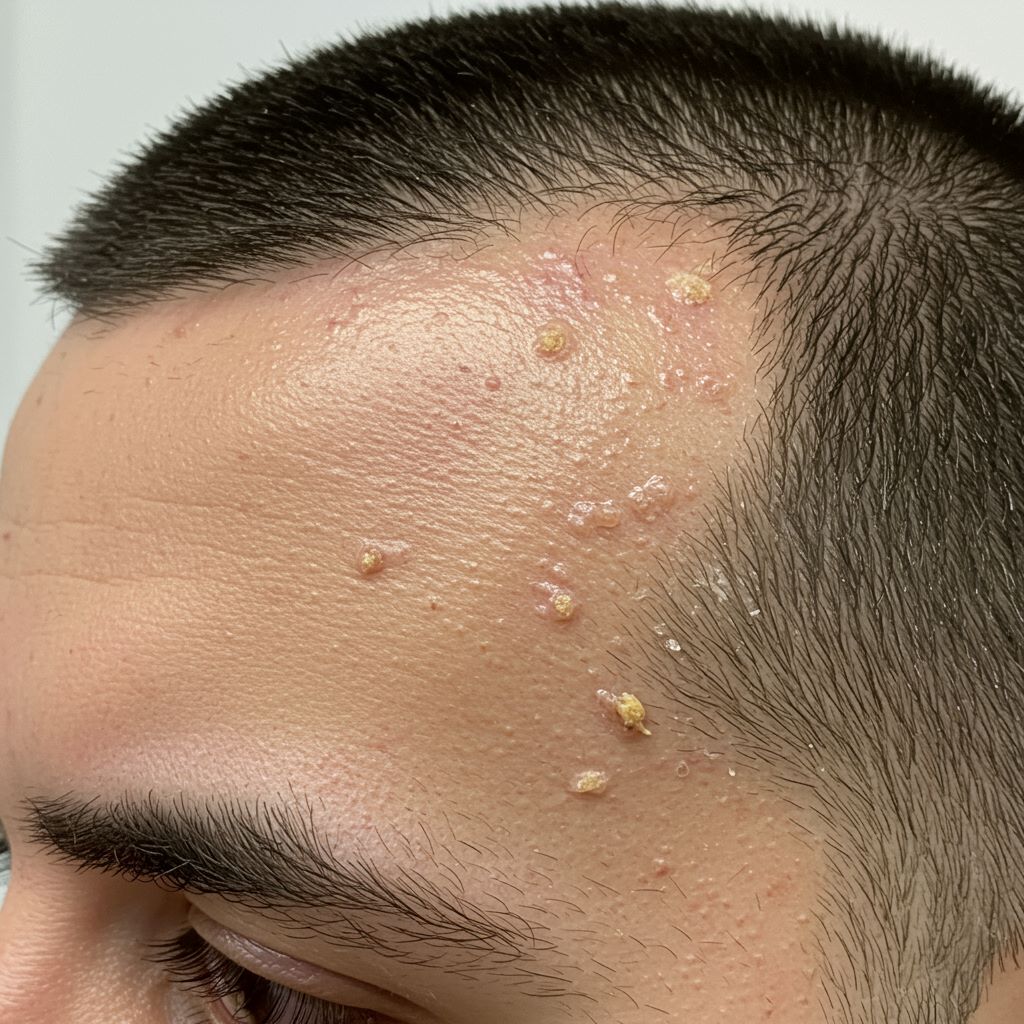
Hair transplant healing time becomes predictable when you track trend, intensity, and progression, not isolated symptoms. Normal healing often includes redness, swelling, crusting, itching, and temporary sensory changes.
Those findings do not automatically mean something is wrong. The real question is whether they are improving in a steady direction and staying localized to treated zones.
Smooth hair transplant healing time depends on a few high-impact drivers: friction control, hygiene consistency, inflammation discipline, and timely escalation when signals deviate from normal.
Most setbacks happen when patients confuse “less discomfort” with “fully healed” and reintroduce trauma, tight hats, sweat-heavy exercise, heat exposure, or aggressive washing. That behavior doesn’t just prolong cosmetic visibility; it can extend recovery by increasing irritation and inflammation.
At HairBot MD, hair transplant healing time is treated as structured medical recovery, not cosmetic guesswork. When you protect the scalp early, you reduce complication risk, stabilize graft beds, and keep the next phases, shedding, dormancy, and regrowth, more predictable. Recovery is not about rushing the calendar. It’s about controlling the variables that actually influence healing.
Redefine Hair Restoration – Advanced Robotic Transplant Solutions at HairBot MD
Step into the future of hair restoration with HairBot MD, your trusted destination for precision-driven robotic hair transplant technology. Our state-of-the-art platform combines cutting-edge robotics with expert medical oversight to deliver natural-looking results with unmatched accuracy and efficiency.
At HairBot MD, we specialize in robotic FUE transplants using systems like ARTAS®, offering minimally invasive procedures, faster recovery, and customized treatment planning. Whether you’re experiencing early-stage hair loss or seeking full restoration, our solutions are designed to meet your unique goals with confidence.
Explore our full range of services and discover how we blend science and artistry to deliver exceptional results. Visit our Home, learn more about our approach, or Contact us to speak with a specialist. Ready to take the first step? Get a Free Assessment today and start your journey to hair confidence.
📍 HairBot MD – Your Destination for Robotic Hair Transplant in Cypress, TX
Looking for the most advanced hair restoration solution near you? HairBot MD specializes in robotic hair transplants using the FDA-cleared ARTAS iX system, delivering precision, speed, and natural results.
✅ Address: 17110 House & Hahl Rd, B-2, Cypress, TX 77433
📞 Call Us: (346) 472-2353
✨ Claim Your Free HairBot MD Assessment!
Whether you’re curious about the ARTAS iX robotic system or ready to schedule a free consultation, our expert team is here to guide you through every step of your hair restoration journey.