
When people search FUE transplant timeline, they usually want one simple answer: “How long until I look normal?” The problem is that the FUE transplant timeline is not a single clock. It runs on two parallel tracks: tissue healing kinetics on the surface and follicular cycling beneath the skin. That is why social downtime is not the same as biologic completion.
At the point when your scalp looks “fine,” inflammation and early remodeling can still be active in the microenvironment. Misreading that gap is one of the biggest reasons patients unintentionally disrupt the FUE transplant timeline.
FUE creates a field of micro-wounds in two zones. In the recipient area, the surgeon creates recipient micro-incisions to place grafts. In the donor area, extraction leaves sub-millimeter punch sites. Both zones pass through the classic wound-healing sequence: hemostasis → inflammation → epithelialization → early remodeling.
The scalp is vascular and reactive, so tiny triggers, friction, sweat, pressure, and contamination can increase inflammatory signaling even when everything looks sealed. That is why the FUE transplant timeline is sensitive to behavior during the first two weeks and also during the “invisible” months that follow.
At HairBot MD, the recovery framework is physician-led and designed around predictable biology. ARTAS iX robotic consistency can support controlled harvesting patterns and donor management, but it does not override physiology or guarantee outcomes.
The purpose of this guide is practical, it highlights the most common mistakes that slow the FUE transplant timeline by increasing friction, occlusion, contamination, or inflammatory load, so your healing stays on track.
FUE Transplant Timeline – Healing Kinetics and the Mistakes That Prolong Inflammation
The first 14 days of the FUE transplant timeline are mostly about wound closure, inflammation control, and barrier restoration. Patients often assume the job is done when scabs fall off and swelling drops. Clinically, that is only the surface checkpoint.
Beneath that surface, the tissue is still reorganizing collagen, stabilizing microcirculation, and recalibrating inflammatory mediators. Most delays in the FUE transplant timeline come from actions that keep that inflammatory signal elevated.
Early wound closure + epithelialization
Crusting forms because the scalp is sealing hundreds or thousands of micro-sites. That crust is not “dirt”; it is part of the protective closure process. In the FUE transplant timeline, the goal is not aggressive removal; the goal is controlled release with proper washing.
- Crusts that loosen gradually = expected epithelialization progress
- Crusts forcibly removed = micro-trauma, delayed barrier stability
- Scrubbing too early = shear forces + irritation loop
A common mistake is trying to “speed it up” by rubbing. In the FUE transplant timeline, scrubbing destabilizes the newly forming barrier. Even if grafts are more secure after a week, irritation still matters because it drives itch and inflammation.
Inflammation control (erythema + edema trends)
At the start of the FUE transplant timeline, redness and swelling are normal inflammatory outputs. What matters clinically is the trend. Redness should become more localized and less intense over time. Swelling should peak early and then clearly improve.
Worsening trends matter because they suggest ongoing irritation, folliculitis risk, or dermatitis triggers, often linked to sweat, heat, rubbing, or contamination.
Barrier restoration and occlusion risk
A scalp can look healed and still be reactive. Occlusion (tight hats, beanies, heavy styling products) traps heat and sweat, increases oil retention, and raises microbial load.
In the FUE transplant timeline, occlusion is a hidden problem because it feels harmless but biologically it can prolong redness and itching.
Donor vs recipient differences
The FUE transplant timeline is not identical in donor and recipient zones.
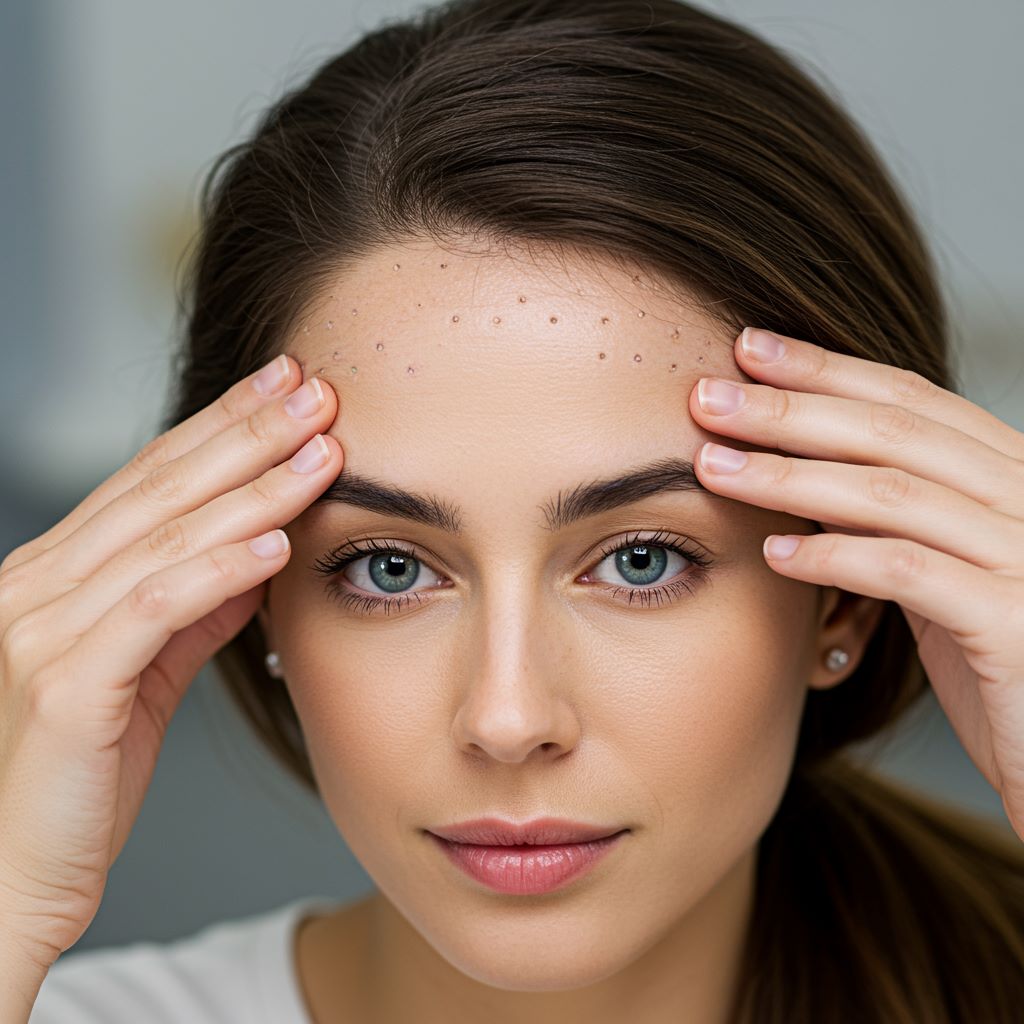
- Donor zone: Pink stippling from punch sites can persist; tightness or sensitivity may occur as nerves and skin normalize.
- Recipient zone: Redness may last longer; itching can be stronger; the zone is more vulnerable to shear forces and pressure.
If you treat both zones the same, you may over-handle the recipient area or under-protect it, both can slow the FUE transplant timeline.
Common Mistakes That Slow Healing in Days 1–14
Below is a clinical list of mistakes with the mechanism → consequence → fix framework. This is the fastest way to protect the FUE transplant timeline when the scalp is most behavior-sensitive.
Mistake: Early friction and scratching
- Mechanism: Shear forces → micro-injury → inflammation spike
- Consequence: Persistent redness, itch escalation, delayed comfort
- Fix: Itch-control plan, nails short, cool compress if approved, avoid rubbing “just for relief”
Mistake: Aggressive washing or high-pressure shower streams
- Mechanism: Shear + crust disruption → barrier delay
- Consequence: Prolonged crusting, irritation, increased scratch risk
- Fix: Low-shear wash technique (lukewarm water, lather in hands, press/pat, gentle rinse)
Mistake: Heat and sweat too early
- Mechanism: Occlusion + salt irritation → itch → rubbing loop
- Consequence: Prolonged erythema, discomfort, higher folliculitis risk
- Fix: Staged return to activity, lower intensity, avoid overheating, cleanse soon after sweating
Mistake: Dirty pillowcases, hats, helmets
- Mechanism: Bacterial load increases → folliculitis risk rises
- Consequence: Bumps, pustules, tenderness, delayed calm scalp environment
- Fix: “Clean contact fabric” protocol (fresh pillowcases, clean hats only, sanitize helmet liners)
Mistake: Smoking or alcohol binges (if applicable)
- Mechanism: Vascular compromise + delayed repair signaling
- Consequence: Slower closure stability, more inflammation volatility
- Fix: Strict avoidance window per physician guidance
Mistake: Self-prescribing topicals or stacking products
- Mechanism: Irritant dermatitis or occlusive buildup
- Consequence: Burning, redness spikes, scaling, prolonged sensitivity
- Fix: Physician-approved products only; keep the routine simple and consistent
The pattern is consistent: most early problems in the FUE transplant timeline are not “surgery failures.” They are inflammation and barrier problems created by friction, occlusion, or contamination.
“Thinking about a second procedure? Let HairBot MD evaluate donor health and timing before you move forward.”
FUE Transplant Timeline – Follicular Cycling, Telogen Reset, and Mistakes That Delay Growth
After the scalp looks healed, the FUE transplant timeline shifts from visible healing to invisible follicle cycling. This is where patients get emotionally confused. They see shedding and assume something went wrong. Clinically, the opposite is often true: shedding can be part of the normal reset process.
Telogen reset biology
Surgery is controlled trauma. Even healthy follicles respond by shifting into a resting phase. In the FUE transplant timeline, transplanted hairs may shed while the follicles remain viable in the skin. The follicle unit is still alive; it is cycling.
This is also why “no growth” early is often normal in the FUE transplant timeline. The months immediately after surgery are not a cosmetic results window. They are a biologic stabilization window.
Shock loss vs normal shedding
Not all shedding is equal. The FUE transplant timeline includes both expected transplant shedding and possible shock loss of native miniaturized hair.
- Normal shedding: Transplanted shafts fall without tissue attached; no bleeding; scalp remains stable
- Shock loss: Nearby native hair sheds due to stress; often temporary, but depends on baseline miniaturization
Understanding that difference prevents panic-driven behavior that can harm the FUE transplant timeline.
Growth staging (what “on-track” usually looks like)
A simplified growth map helps patients stop over-checking daily.
- Weeks 2–8: Telogen shedding/reset; cosmetic dip can happen
- Months 3–4: Early anagen re-entry; thin new hairs begin emerging
- Months 6–12: Thickening and caliber maturation; cosmetic density improves
Your FUE transplant timeline is not a straight upward line. It is often a dip, then gradual return, then thickening.
Patient behavior pitfalls that delay growth
Once people feel normal, they start “optimizing.” This is where many delays happen.
- Over-intervention: Too many supplements, topical stacking, microneedling too soon
- Mechanical stress: Tight headwear, helmet pressure, friction during workouts
- Inconsistent scalp hygiene or heavy product occlusion
- Skipping follow-ups or ignoring early inflammation signs
The follicles need a stable microenvironment. In the FUE transplant timeline, irritation does not just affect comfort, it can affect how cleanly the scalp transitions into the growth phase.
Common Mistakes That Slow Healing and Growth From Weeks 2–12
This is the “I’m fine now” danger zone. The scalp feels better, so patients resume everything, then wonder why redness lingers or shedding feels intense.
Mistake: Panicking during the shedding phase
- Consequence: Unnecessary interventions, scalp irritation, clinic-hopping
- Fix: Understand telogen reset, track with photos weekly (not daily), focus on stability
Mistake: Early camouflage with occlusive concealers
- Consequence: Clogged follicles, irritation, prolonged redness
- Fix: Use only when clinic-approved, choose breathable options, cleanse properly afterward
Mistake: Heavy exercise and sweat exposure without a scalp protocol
- Consequence: Itch → rubbing → inflammation loop
- Fix: Staged return, reduce intensity, immediate cleansing, avoid hot environments
Mistake: Tight hats/helmets as normal life resumes
- Consequence: Pressure/friction → persistent erythema and discomfort
- Fix: Low-pressure headwear, limit wear time, keep contact fabric clean
Mistake: Inconsistent follow-up or ignoring red flags
- Consequence: Untreated folliculitis/dermatitis can derail the FUE transplant timeline
- Fix: Symptom checklist + clear thresholds for contacting the clinic (pain, warmth, drainage, spreading redness)
In weeks 2–12 of the FUE transplant timeline, the goal is not to “force growth.” The goal is to maintain a low-inflammation scalp environment so the follicles can re-enter anagen smoothly.
“Still worried about pain? Speak with our team and learn how modern FUE at HairBot MD prioritizes comfort and precision.”
FUE Transplant Timeline – Final Recovery Takeaways
The most accurate way to understand the FUE transplant timeline is to treat it as two processes happening at once. Tissue repair improves first: wounds close, crusting resolves, and surface comfort returns.
Follicular cycling takes longer: telogen reset can occur in weeks 2–8, early growth often starts around months 3–4, and true thickening continues through months 6–12.
That is why “looking okay” does not mean biologic completion in the FUE transplant timeline. The scalp can appear stable while inflammation and remodeling still respond to triggers underneath.
Most delays in the FUE transplant timeline come from predictable behavior mistakes: friction and scratching, aggressive washing, early heat and sweat exposure, occlusion from tight hats or heavy products, and contamination from dirty pillowcases or headwear.
Over-intervention is another major disruptor, patients stack topicals or try aggressive add-ons too soon, which can cause irritant dermatitis and prolong redness. The smarter strategy is boring but effective: protect the barrier, keep the scalp clean, and reduce inflammatory noise.
At HairBot MD, physician-led recovery planning and ARTAS iX robotic consistency support controlled donor management and predictable harvesting patterns, but outcomes still depend on patient aftercare and biologic response.
Your practical promise is simple: follow a low-friction hygiene plan, avoid heat and occlusion triggers, and track progress week-by-week with photos. If you stay consistent, your FUE transplant timeline stays on track.
Redefine Hair Restoration – Advanced Robotic Transplant Solutions at HairBot MD
Step into the future of hair restoration with HairBot MD, your trusted destination for precision-driven robotic hair transplant technology. Our state-of-the-art platform combines cutting-edge robotics with expert medical oversight to deliver natural-looking results with unmatched accuracy and efficiency.
At HairBot MD, we specialize in robotic FUE transplants using systems like ARTAS®, offering minimally invasive procedures, faster recovery, and customized treatment planning. Whether you’re experiencing early-stage hair loss or seeking full restoration, our solutions are designed to meet your unique goals with confidence.
Explore our full range of services and discover how we blend science and artistry to deliver exceptional results. Visit our Home, learn more about our approach, or Contact us to speak with a specialist. Ready to take the first step? Get a Free Assessment today and start your journey to hair confidence.
📍 HairBot MD – Your Destination for Robotic Hair Transplant in Cypress, TX
Looking for the most advanced hair restoration solution near you? HairBot MD specializes in robotic hair transplants using the FDA-cleared ARTAS iX system, delivering precision, speed, and natural results.
✅ Address: 17110 House & Hahl Rd, B-2, Cypress, TX 77433
📞 Call Us: (346) 472-2353
✨ Claim Your Free HairBot MD Assessment!
Whether you’re curious about the ARTAS iX robotic system or ready to schedule a free consultation, our expert team is here to guide you through every step of your hair restoration journey.