
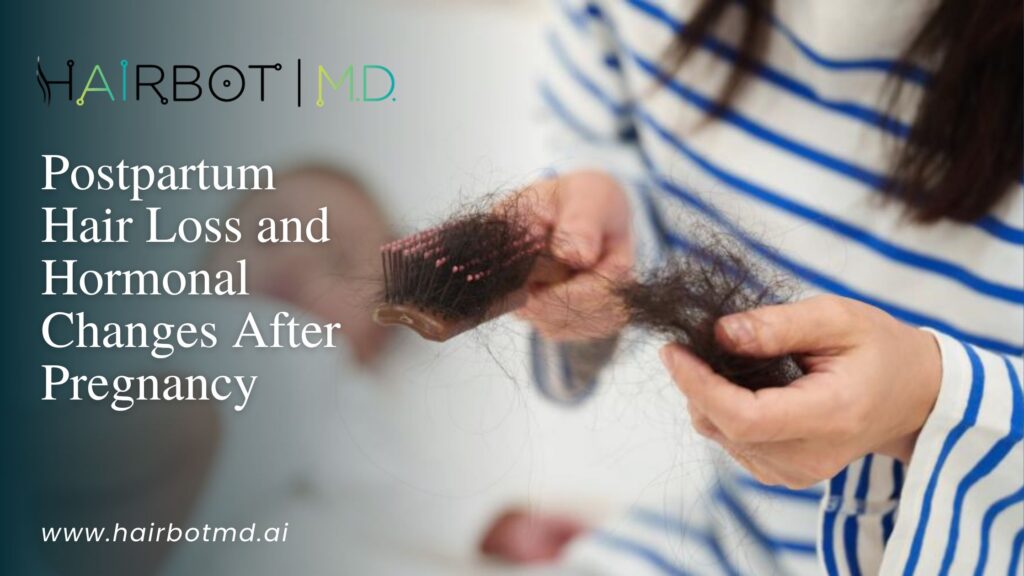
Postpartum hair loss feels frightening for many women because the shedding usually begins suddenly, often only a few weeks after childbirth, right when they finally think recovery is settling down.
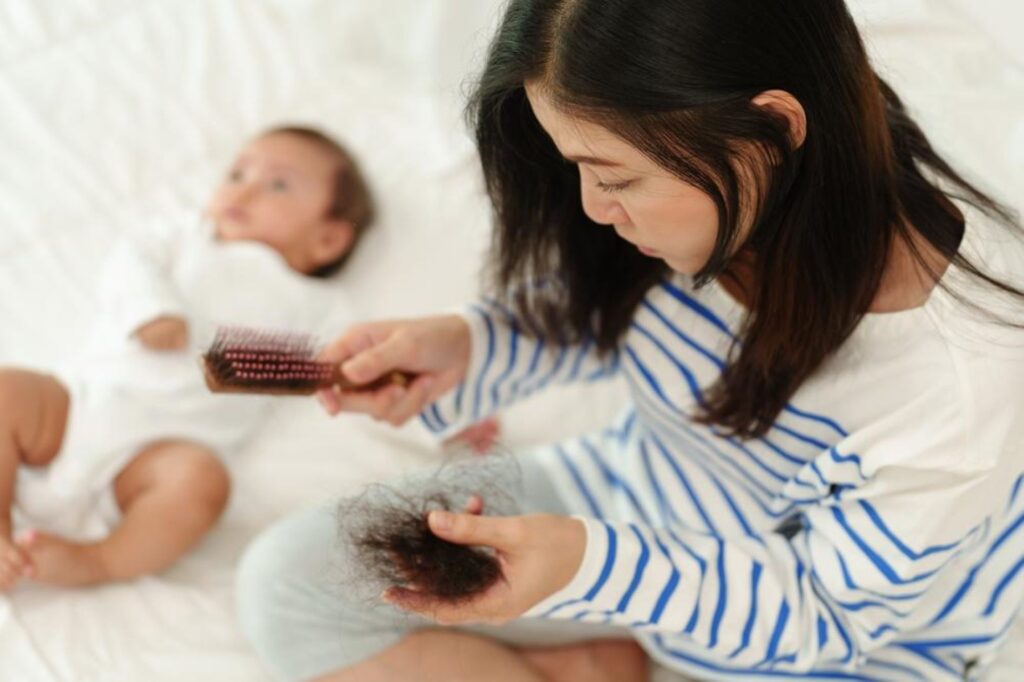
One day, the hair looks completely normal, then suddenly loose strands start showing up on pillows, shower drains, hair brushes, and even clothes, almost nonstop.
For many mothers, the emotional stress hits harder because all of this happens during an already exhausting time filled with hormonal shifts, poor sleep, physical recovery, and constant newborn care.
In most situations, postpartum hair loss develops as a physiologic form of telogen effluvium triggered by rapid hormonal withdrawal after delivery. During pregnancy, higher estrogen levels keep more follicles locked in the anagen growth phase, so fewer hairs are shed naturally.
After childbirth, estrogen drops very fast and pushes a large number of follicles into synchronized telogen shedding all at once. The thinning can look dramatic, honestly, even though the follicles underneath the scalp usually remain alive and capable of regrowth.
Postpartum hair loss is not just cosmetic shedding or simple temporary thinning. It reflects a biological follicular cycling shift involving endocrine fluctuations, vascular recovery, inflammatory signaling, metabolic stress, and nutritional depletion happening together.
Many women worry about widened hair parts, frontal hairline thinning, excessive shedding, and the fear that the density may never fully return.
This guide explores postpartum hair loss from hormonal, follicular, recovery, nutritional, and treatment perspectives while also discussing HairBot MD’s physician-led approach to scalp evaluation and personalized hair restoration planning.
Postpartum Hair Loss and the Hormonal Biology of Follicular Shedding
How Hormonal Changes Trigger Postpartum Hair Loss
Postpartum hair loss begins when the normal follicular growth cycle suddenly changes after childbirth. Hair follicles constantly rotate through three biologic stages that control how hair grows, rests, and sheds over time
- Anagen: Active growth phase
- Catagen: Short transition phase
- Telogen: Resting and shedding phase
During pregnancy, rising estrogen levels keep follicles in the anagen phase longer, which means fewer hairs shed naturally. Many women notice their hair looks thicker, fuller, and healthier during pregnancy because follicles remain active for longer periods than usual.
After childbirth, though, estrogen levels fall very quickly and push a large number of follicles into synchronized telogen shedding almost together at the same time. This rapid biologic transition creates postpartum telogen effluvium, one of the leading causes of postpartum hair loss.
For most women, shedding becomes most noticeable between months 2–4 after delivery. The thinning usually spreads diffusely across the scalp rather than creating isolated bald patches, commonly seen with localized alopecia disorders.
Inflammatory signaling, vascular recovery, metabolic stress, and physical exhaustion after pregnancy may also disrupt follicular cycling and make shedding feel more intense sometimes than it truly is.
Postpartum Hair Loss and Endocrine Recovery After Pregnancy
Several hormonal systems influence postpartum hair loss recovery after childbirth, including
- Estrogen
- Progesterone
- Prolactin
- Cortisol
- Thyroid hormones
Sleep deprivation, physiologic stress, nutritional depletion, and physical recovery after delivery can intensify postpartum hair loss even further. Low ferritin levels, iron deficiency, vitamin D depletion, and incomplete nutritional recovery may slow healthy follicular regrowth.
Breastfeeding itself does not directly trigger postpartum hair loss, but increased metabolic demands sometimes delay recovery in certain women, especially during prolonged recovery periods.
How to Differentiate Normal Postpartum Hair Loss From Pathologic Hair Loss
Normal postpartum hair loss often includes
- Diffuse shedding
- Increased hair fall during washing or brushing
- Temporary reduction in density
Certain symptoms may require physician evaluation instead, including
- Patchy bald spots
- Persistent shedding beyond 12 months
- Severe frontal recession
- Scalp inflammation
- Fatigue or systemic symptoms
Physicians may investigate other causes like androgenetic alopecia, alopecia areata, thyroid dysfunction, or chronic telogen effluvium when postpartum hair loss appears prolonged, unusually severe, or progressively aggressive.
Postpartum Hair Loss Recovery, Regrowth, and Treatment Strategies
The Recovery Timeline of Postpartum Hair Loss
Postpartum hair loss recovery happens gradually as normal follicular cycling slowly stabilizes again after childbirth. Many women expect density to return immediately once shedding slows down, but biologic recovery usually takes longer than visible improvement.
The shedding phase often improves first while cosmetic density continues rebuilding underneath the scalp over several more months. Most postpartum hair loss recovery follows several overlapping stages
- Active shedding phase
- Telogen stabilization
- Early anagen reactivation
- Caliber thickening and density maturation
For many women, noticeable regrowth begins developing between months 6–12 postpartum. Early regrowth hairs often appear short, fine, soft, or lightly pigmented before stronger maturation develops later.
Honestly, this uneven regrowth pattern sometimes worries patients even though it commonly reflects normal follicular recovery.
Treatment Options for Postpartum Hair Loss
Treatment for postpartum hair loss depends on the severity of shedding, nutritional status, hormonal recovery, and overall scalp health. Physician-guided management may include:
- Nutritional correction
- Ferritin optimization
- Scalp health restoration
- Low-level laser therapy
- PRP therapy considerations
- Topical growth support therapies
Conservative management often works well because many postpartum hair loss cases improve naturally over time without aggressive intervention. Still, prolonged shedding, scalp inflammation, or worsening density may require medical evaluation.
Psychological Effects of Postpartum Hair Loss
Postpartum hair loss affects more than physical appearance sometimes. Visible shedding after childbirth can strongly affect confidence, self-image, social comfort, and emotional recovery during motherhood.
Many women feel overwhelmed seeing constant hair fall during an already stressful recovery period. Realistic timelines, physician reassurance, and individualized support at HairBot MD can help patients better understand the recovery process while reducing unnecessary fear during regrowth stages.
“Ready to embrace the future of hair restoration? Schedule your free precision consultation today.”
Final Thoughts on Postpartum Hair Loss
Postpartum hair loss usually develops as a hormonally triggered form of telogen effluvium rather than permanent follicular destruction. Even though the shedding can look severe and emotionally overwhelming, most follicles remain alive underneath the scalp and still capable of healthy regrowth.
The sudden increase in hair fall happens because pregnancy temporarily prolongs anagen retention, allowing more follicles to stay in active growth phases for longer periods.
After childbirth, rapid endocrine withdrawal resets follicular cycling and pushes a large number of hairs into synchronized shedding almost together at the same time.
Recovery from postpartum hair loss depends on several biologic factors working together, including hormonal stabilization, nutritional recovery, scalp health, vascular normalization, and follicular re-entry into healthy anagen growth phases.
Visible shedding often appears much worse than the actual degree of permanent density reduction, which is why many women panic during the early recovery stages. Honestly, this becomes one of the most misunderstood parts of postpartum hair loss.
For most women, postpartum hair loss gradually improves over several months as normal follicular cycling slowly stabilizes again. New regrowth may initially appear thin, soft, uneven, or lightly pigmented before stronger maturation develops later.
Physician-guided evaluation at HairBot MD can help differentiate normal postpartum shedding from underlying scalp disorders, endocrine dysfunction, nutritional deficiencies, or other systemic conditions that may require targeted treatment and long-term management.
Redefine Hair Restoration – Advanced Robotic Transplant Solutions at HairBot MD
Step into the future of hair restoration with HairBot MD, your trusted destination for precision-driven robotic hair transplant technology. Our state-of-the-art platform combines cutting-edge robotics with expert medical oversight to deliver natural-looking results with unmatched accuracy and efficiency.
At HairBot MD, we specialize in robotic FUE transplants using systems like ARTAS®, offering minimally invasive procedures, faster recovery, and customized treatment planning. Whether you’re experiencing early-stage hair loss or seeking full restoration, our solutions are designed to meet your unique goals with confidence.
Explore our full range of services and discover how we blend science and artistry to deliver exceptional results. Visit our Home, learn more about our approach, or Contact us to speak with a specialist. Ready to take the first step? Get a Free Assessment today and start your journey to hair confidence.
📍 HairBot MD – Your Destination for Robotic Hair Transplant in Cypress, TX
Looking for the most advanced hair restoration solution near you? HairBot MD specializes in robotic hair transplants using the FDA-cleared ARTAS iX system, delivering precision, speed, and natural results.
✅ Address: 17110 House & Hahl Rd, B-2, Cypress, TX 77433
📞 Call Us: (346) 472-2353
✨ Claim Your Free HairBot MD Assessment!
Whether you’re curious about the ARTAS iX robotic system or ready to schedule a free consultation, our expert team is here to guide you through every step of your hair restoration journey.