
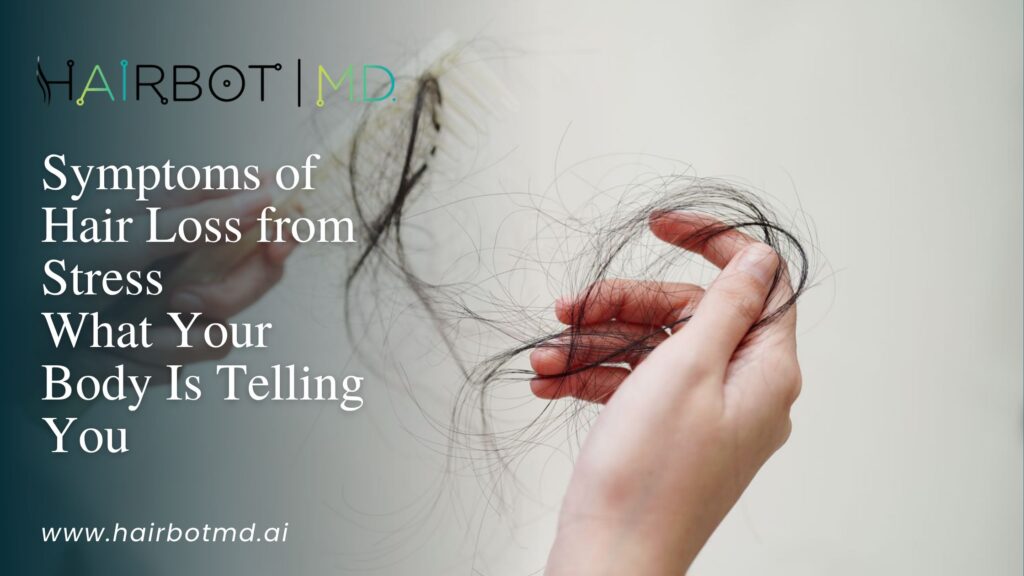
Stress doesn’t only live in your mind. It leaves fingerprints all over your body during your sleep, hormones, digestion, and yes, on your hair. When stress builds up, symptoms of hair loss can appear as diffuse shedding, a thinner ponytail, more scalp showing through, or even a flare of an existing condition, such as androgenetic alopecia or alopecia areata.
In medical terms, acute and chronic stress are classic triggers for telogen effluvium, a condition where too many follicles enter the resting (telogen) phase at the same time.
Stress can also worsen androgenetic alopecia (male- or female-pattern hair loss) and occasionally precede flares of alopecia areata, an autoimmune form of patchy hair loss.
Stress hormones like cortisol and catecholamines, poor-quality sleep, appetite changes, and crash dieting all disturb the normal hair cycle (anagen → catagen → telogen).
The result – symptoms of hair loss that may not show up immediately after a stressful event, but peak 2–3 months later. This is why many people notice shedding after COVID-19 infection, surgery, childbirth, major weight loss, exams, or big life changes.
HairBot MD exists exactly for this grey zone. It’s a science-led, tracking-first platform designed to help you log symptoms of hair loss, connect them to stressors, and recognize when you can safely watch and wait and when it’s time to see a dermatologist.
Understanding Symptoms of Hair Loss from Stress in the Hair Growth Cycle
How Stress Disrupts the Hair Cycle and Triggers Symptoms of Hair Loss
To understand symptoms of hair loss from stress, you first need the basics of the hair cycle. Each follicle moves through four phases:
- Anagen: Active growth phase (can last years on the scalp)
- Catagen: Short transition phase
- Telogen: Resting phase
- Exogen: Shedding of the old hair shaft
In a healthy scalp, about 85–90% of follicles are in anagen. Normal shedding of 50–100 hairs per day reflects old hairs exiting while new ones quietly replace them.
In telogen effluvium, a major physical or emotional stressor “shocks” a larger-than-normal proportion of follicles into telogen at the same time.
After a lag of 2–3 months, these telogen hairs are shed together; that’s when symptoms of hair loss become obvious: hair on the pillow, in the shower drain, or coming out in “handfuls” in the shower.
Triggers that can push follicles into telogen include:
- Severe illness or high fever (including COVID-19)
- Major surgery or hospitalization
- Childbirth and postpartum hormonal changes
- Crash dieting, rapid weight loss, or severe calorie restriction
- Significant psychological stress or trauma
- Some medications and acute endocrine changes
The key point: with stress-related telogen effluvium, symptoms of hair loss often appear after things “feel better”. The stressful event is in the past, but shedding peaks weeks later, which can be confusing and frightening if you don’t know the timeline.
Differentiating Stress-Related Symptoms of Hair Loss from Genetic and Autoimmune Alopecia
Not every increase in shedding is caused by stress, and not every thin patch is genetic. Distinguishing stress-related symptoms of hair loss from other types of alopecia is critical for prognosis and management.
Stress-related telogen effluvium typically shows
- Diffuse thinning over the entire scalp
- A ponytail that feels smaller or lighter
- More hair in the brush, drain, or on clothing
- A scalp that looks normal on exam, no redness, scaling, or scarring
Androgenetic alopecia (pattern hair loss) usually produces
- Receding hairline and crown thinning in men (classic “M” pattern)
- Widening part and reduced density over the crown in women
- Gradual progression over the years, which stress can accelerate
- Persistent miniaturization of follicles over time
Alopecia areata tends to cause
- Round or oval, sharply defined bald patches
- Loss of eyebrows, eyelashes, or beard hair in some cases
- Sometimes nail changes (pitting, ridging)
- Possible burning or tingling before hair falls out
Scalp findings help, too. In pure telogen effluvium, the scalp often looks normal. When symptoms of hair loss come with scaling, redness, crusting, pustules, or shiny atrophic patches, dermatologists think about fungal infection, psoriasis, or scarring alopecias instead.
Getting the category right matters. Stress-related symptoms of hair loss from telogen effluvium are usually reversible once triggers are controlled.
Genetic pattern hair loss is chronic and often needs ongoing treatment. Autoimmune and scarring conditions may require early, aggressive therapy to prevent permanent damage.
Symptoms of Hair Loss from Stress
Stress can certainly explain many symptoms of hair loss, but it must never be used as a blanket diagnosis. Hair shedding that appears “stress-related” can coexist with, or mask, other medical problems.
Watch for co-symptoms that suggest additional work-up:
- Thyroid disease clues: Fatigue, weight change, feeling unusually cold or hot, constipation or diarrhea, palpitations
- Iron deficiency clues: Very heavy periods, craving ice, shortness of breath on exertion, pallor
- Autoimmune disease clues: Joint pain, swelling, fevers, rashes, photosensitivity, mouth ulcers
- Endocrine/metabolic clues: Irregular periods, acne, excess facial hair, sudden weight gain or loss
HairBot MD encourages users to log not only visible symptoms of hair loss, but also associated systemic symptoms. Over time, this structured logging produces a timeline that dermatologists and primary care physicians can review to decide whether you need blood tests, imaging, or a scalp biopsy.
Want to go deeper on treatment options? 👉 Read our full guide on how to stop hair loss here and get practical, science-based next steps.
Real-World Symptoms of Hair Loss from Stress – What You See and Feel
Visible Symptoms of Hair Loss from Stress in Daily Life
In real life, symptoms of hair loss rarely look like a textbook photo. Instead, you notice subtle changes first:
- Your ponytail wraps an extra time with the same hair tie.
- The part in your hair looks wider in selfies or under bright bathroom light.
- More scalp skin shines through when your hair is wet or pulled back.
Then come the more dramatic symptoms of hair loss from stress:
- Hair on the pillow when you wake up
- Hair collecting in the shower drain or on the bathroom floor
- Strands all over your clothes or keyboard
- “Handfuls” of hair when shampooing or combing
This shedding often feels worse 2–3 months after the big stress event, then gradually settles over several months as follicles reset.
HairBot MD helps turn these subjective impressions into objective data. Inside the app, you can:
- Log your daily shedding level on a 0–10 scale
- Upload photos of your part, temples, and crown at regular intervals
- Tag dates when symptoms of hair loss felt suddenly worse or better
Over time, this creates a personalized “shedding curve” that can differentiate a short-lived telogen effluvium from a slowly progressive pattern of hair loss.
Scalp Sensations and Associated Symptoms of Hair Loss from Stress
Many people notice strange sensations along with symptoms of hair loss:
- Tightness or “helmet” feeling on the scalp
- Mild tingling or crawling sensations
- Vague tenderness when you run fingers through the hair
In classic telogen effluvium, inflammation is minimal, so these feelings are usually mild and non-specific. They often reflect heightened awareness and anxiety about symptoms of hair loss rather than active scalp disease.
However, certain sensations are red flags and may signal infection or scarring:
- Burning or stinging in areas of thinning
- Intense itching that keeps you awake
- Redness, swelling, thick scaling, or yellow crusts
- Pustules (small pimples with pus) or painful bumps
When symptoms of hair loss appear together with these signs, you need an in-person dermatology assessment. Conditions like tinea capitis (fungal infection), psoriasis, folliculitis decalvans, or scarring alopecias must be ruled out early to avoid permanent follicle damage.
HairBot MD lets you log these scalp sensations alongside photos, so when you finally sit with a dermatologist, you can show exactly when and where symptoms changed rather than trying to remember timelines from memory.
Gender- and Age-Specific Symptoms of Hair Loss from Stress
The same stressor can produce different symptoms of hair loss depending on your sex, hormones, and age.
- Stress layered on top of postpartum shifts, perimenopause/menopause, PCOS, or restrictive dieting
- Widening part and reduced crown volume on a background of female-pattern hair loss
- Telogen effluvium after childbirth, COVID-19, surgery, or sudden weight changes
Men may see
- Pre-existing androgenetic alopecia suddenly sped up after a stressful year
- Faster recession at the temples or more visible crown thinning
- Increased daily shedding on top of a stable but slowly receding hairline
Older adults frequently have
- Baseline age-related thinning
- Polypharmacy (multiple medications), chronic illness, and nutritional deficits
- Telogen effluvium superimposed on androgenetic alopecia, making the symptoms of hair loss more dramatic
HairBot MD can segment your symptoms of hair loss by age, sex, and life stage, helping you see where stress may be acting alone and where it is interacting with hormones, medications, or genetic risk.
Curious about advanced hair restoration options? 👉 Learn how robotic hair transplant works and see if this precision-based solution is right for you.

Final Word – Symptoms of Hair Loss from Stress and Your Next Steps
Stress-related symptoms of hair loss are frightening but common and often reversible. In many cases, your follicles are not “dead”; they are shocked, resting, and waiting for the system around them to stabilize.
At the same time, stress can unmask thyroid disease, iron deficiency, autoimmune conditions, and genetic pattern hair loss that deserve proper medical attention.
The core message: listen early to symptoms of hair loss, take them seriously, and track them objectively instead of guessing. Don’t dismiss months of heavy shedding as “just stress” without checking for deeper causes, but don’t assume every shed hair means permanent baldness, either.
HairBot MD is designed to be your long-term companion in that grey zone. It helps you
- Monitor symptoms of hair loss with structured logs and photos
- Link shedding spikes to specific stressors, illnesses, or medication changes
- Decide when watchful waiting is reasonable and when a dermatologist visit is overdue
- Walk into appointments with a clear, data-backed story instead of vague worry
If you’re noticing new symptoms of hair loss after a stressful period, start logging today. Map your recent stressors, sleep patterns, and health changes in HairBot MD, then bring that record to your care team. Together, you can turn a scary, confusing experience into a clear plan for regrowth, recovery, and long-term scalp health.
Redefine Hair Restoration – Advanced Robotic Transplant Solutions at HairBot MD
Step into the future of hair restoration with HairBot MD, your trusted destination for precision-driven robotic hair transplant technology. Our state-of-the-art platform combines cutting-edge robotics with expert medical oversight to deliver natural-looking results with unmatched accuracy and efficiency.
At HairBot MD, we specialize in robotic FUE transplants using systems like ARTAS®, offering minimally invasive procedures, faster recovery, and customized treatment planning. Whether you’re experiencing early-stage hair loss or seeking full restoration, our solutions are designed to meet your unique goals with confidence.
Explore our full range of services and discover how we blend science and artistry to deliver exceptional results. Visit our Home, learn more about our approach, or Contact us to speak with a specialist. Ready to take the first step? Get a Free Assessment today and start your journey to hair confidence.
📍 HairBot MD – Your Destination for Robotic Hair Transplant in Cypress, TX
Looking for the most advanced hair restoration solution near you? HairBot MD specializes in robotic hair transplants using the FDA-cleared ARTAS iX system, delivering precision, speed, and natural results.
✅ Address: 17110 House & Hahl Rd, B-2, Cypress, TX 77433
📞 Call Us: (346) 472-2353
✨ Claim Your Free HairBot MD Assessment!
Whether you’re curious about the ARTAS iX robotic system or ready to schedule a free consultation, our expert team is here to guide you through every step of your hair restoration journey.